Estate Administration & Tax Planning
December 30, 2024
Successful ESTATE ADMINISTRATION means that your intentions are met and your family is cared for.
Critical Questions Highland Can Help You Answer:
- What happens to my assets when I pass away?
- Who will oversee my estate and ensure my wishes are carried out?
- What does my Will actually specify, and does it reflect my current intentions?
- How should my accounts be titled to align with my estate plan?
- Who are my listed beneficiaries, and are my contingent beneficiaries up to date?
- Do I need a trust, and if so, what kind?
- How does life insurance factor into my estate plan?
- How can I approach conversations with my parents about their estate plan?
- Can my advisor work with my estate planning attorney to achieve better results?
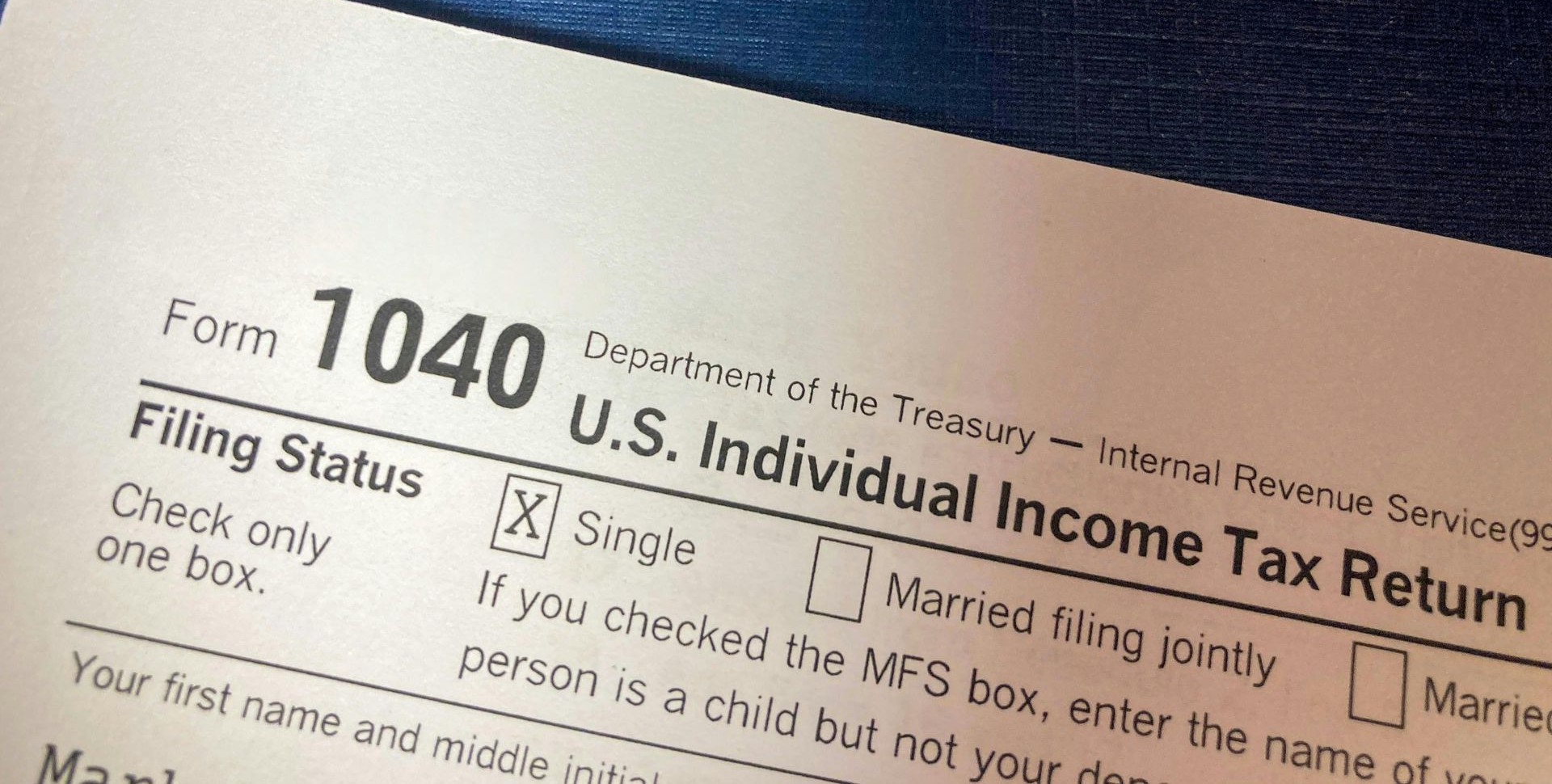
Smart TAX PLANNING Identifies Opportunities to Reduce, Defer, or Eliminate Taxes—Now and Over Your Lifetime
Critical Questions Highland Can Help You Answer:
- How much am I currently paying in taxes, and where can I find savings?
- Are there strategies to reduce how much I owe?
- Am I contributing enough to my retirement accounts to maximize tax advantages?
- Are there any tax credits or deductions I qualify for?
- What does it mean to eliminate taxes, and how can it apply to my financial situation?

Highland Investment Advisors works best when combining financial planning with investment advice by taking a tax-aware approach. By understanding how your financial pieces can fit together, we can provide specific advice tailored to your situation. We are approaching the end of the year and there are a number of things to get done while there is still time. The following are a few things we should consider. Or contact me directly, and I can curate this list specifically for you and your family. Employer Retirement Plans – 401k Let’s look at your last paycheck stub to see how much you have contributed to your employer’s 401k retirement account. The goal is to contribute as much as possible to take advantage of the preferred tax treatment of these types of accounts. • For 2025, the maximum you can contribute is $23,500. • If you are 50 years old or older, you can contribute an additional $7,500 for a total of $31,000. • New for 2025, if you are ages 60 to 63, you can contribute an additional $11,250 for a total of $34,750. Mega Backdoor Roth Contribution via a 401k plan psst…This one is a little-known secret. Let’s review your 401k “Summary Plan Description” which contains the details of your employer’s plan. Many plans (but not all) allow for additional contributions to bring the total allowable contributions up to $70,000 (or more if aged 50 or older). This amount consists of: • your contributions up to $23,500 (either pre- or post-tax), • plus the employer’s matching contribution (pre-tax), • plus an additional “after-tax” contribution from you that can be immediately converted into a Roth 401k balance, • for a total contribution of $70,000 (or more if aged 50 or older). It is an excellent way to save more in a way that can grow in a tax-exempt Roth account, especially if you are expecting a year-end bonus. Own a business or have a side hustle? Have you set up a retirement plan for your business or side hustle? There are a number of options to consider. Let’s talk about these to see which type of retirement plan fits best with your business and objectives. It may be a way to reduce your taxable income this year while also saving for the future. Flex Spending Accounts “FSA” Many employers offer a flexible spending account that allow money to be set aside pre-tax to be used for such things as dependent care or health related expenses. However, these accounts need to be used by year-end or the funds may be forfeited. Let’s make a plan to use these dollars before it’s lost. Health Savings Accounts “HSA” If your family’s health insurance plan is considered to be a high-deductible health plan it may also be an HSA eligible plan. If so, for 2025, a family is allowed to contribute up to $8,550 into a Health Savings Account (“HSA”). These accounts are triple tax exempt(!), meaning that you first get a tax deduction for the contribution into the account, the earnings are exempt from tax, and distributions from the account for qualifying medical expenses are also tax-free. 529 Plans for Education Savings While we are saving money in a tax-advantaged way, consider saving for your child’s (or grandchildren’s) education. Earnings on these accounts are exempt from tax, and distributions from the account for qualifying educational expenses are also tax-free. Wisconsin even offers a tax deduction up to $5,130 per student. Buy a new car? The interest on loans for new cars, assembled in the United States, is tax deductible now through 2028. Itemized vs. Standard Tax Deduction One of the more significant changes to tax laws from the One Big Beautiful Bill is the increase of the amount allowed to be deducted for state and local taxes (referred to as SALT). Starting in 2025, the limit for SALT deductions has increased to $40,000, up from $10,000 previously. This may create an opportunity for you to save on income taxes by “bunching” your itemized deductions into a particular calendar year to increase the amount of your deductions above the standard deduction of $31,500 (for a married couple). It might be advantageous to pay your property real estate tax bill in 2025. Or make two years’ worth of charitable contributions this year, to take full advantage of the higher itemized limits. Or make an estimated tax payment to the state before December 31st. As always, talk to your tax professional for details. Donation of Appreciated Securities Rather than selling an investment and incurring a capital gain to generate cash for a gift to charity, consider donating that security directly to the charity. This allows you to avoid the capital gains and still receive a tax deduction for the fair market value of the securities donated. Check your Estimated Tax Payments and Payroll Withholding To avoid underpayment penalties, make sure you are on target to pay in either a.) 110% of your 2024 total tax, or b.) 90% of 2025’s estimated tax (within $1,000). Watch out for bonus payments, which may not withhold enough for taxes. Typically, they only withhold at a 22% rate, but your marginal tax rate may be higher. Effective Tax Rate and Marginal Tax Rate Your effective tax rate is the percentage of your total income you pay in income taxes. Your marginal tax rate is the percentage you pay on the next dollar of income. Many of the recommendations here help to reduce your taxable income and lower the amount taxed at your marginal tax rate. If you are in the 37%, 35%, 32%, and even the 24% marginal tax brackets, these can be meaningful savings. Tax Loss Harvesting Although equity markets are at all-time highs, you may still have positions in your taxable investment portfolio that are at a loss. Consider selling to recognize the loss for tax purposes. This loss can first be used to offset taxable capital gains generated elsewhere. Then up to $3,000 can be deducted against your ordinary income. Additional losses can be carried forward into future years. When reinvesting the proceeds, be sure to watch out for the Wash Sale Rules which could result in that loss being disallowed. Required Minimum Distributions (RMDs) Turning 73 this year? Happy birthday. You have until April 1st, 2026 to take your first required minimum distribution from most retirement accounts such as your Traditional IRA or 401k. But don’t wait that long. It may be more advantageous to start the process sooner. Roth Conversions Let’s look at your estimated income for 2025 and the marginal tax bracket you are likely in. If your tax bracket is low this year, consider converting funds from your Traditional IRA or 401k into a Roth IRA. This may reduce the amount of tax you pay over your lifetime, particularly if your projected RMDs may be significant. This technique often works amazingly well in the early years of retirement. Roth IRAs are wonderful “tax exempt” accounts that can grow tax free. Let Highland do some math for you to help quantify this decision. Premium Tax Credit for health insurance Currently, a refundable tax credit is available for the purchase of health insurance through HealthCare.gov by lowering monthly payments or claiming on your tax return. The income qualifications make eligibility and the amount of the credit quite complicated. Let’s run a projection. Harvesting Capital Gains at 0% The capital gains tax rate for is 0% for married couples, up to $96,700. Again, let’s look at your estimated income for 2025. Maybe this is an opportunity to make your investment portfolio much more tax-aware. Watch out for capital gain distributions! Certain investment structures, like mutual funds and some ETFs, distribute income annually to shareholders. This can trigger taxes (unnecessarily in my opinion). This may be a good time to change your portfolio to a more tax-aware approach. Make Tax-Aware Investment Decisions Let’s review where your investments are held to minimize the tax drag. Keep tax efficient assets, like ETFs and index funds, in your taxable account. Higher income and active strategies are better kept in tax-advantaged accounts. Depending on your marginal income tax rate, tax exempt (or double tax exempt) municipal bonds may be advantages. Rebalance your Portfolio Strong returns may have tilted your investments towards more risk than you may be willing to accept. But let’s be thoughtful about rebalancing before incurring capital gains in a taxable account. Reallocations in tax advantaged accounts may be more efficient. Create a Plan for 2026 and 2027 Cash Needs The “distribution” phase of your financial life involves living off the investment portfolio you spent your life accumulating. Plan out your spending needs for the next couple of years, and match this to your investment strategy. While your nest egg still needs to grow, don’t take unnecessary risks with your spending cash. It may reduce anxiety when markets get volatile. Stop accumulating cash in your checking account Yields are still attractive, especially compared to what little is offered in a checking account. While this may seem overwhelming, Highland Investment Advisors can help you simplify this. We understand how each of these pieces fit together and customize our advice to your situation. This commentary should be considered informational only and should not be considered tax or investment advice. It is recommended that you speak to a tax and/or investment professional directly to determine how this may impact your situation.

Highland Investment Advisors continues to grow, and we’re seeking a Client Experience Associate to join our Brookfield office. If someone in your network would thrive in a collaborative, client-focused environment, we’d love an introduction. You may apply on LinkedIn, here: https://www.linkedin.com/jobs/view/4314659935/

Below is a summary of the third-quarter 2025 market performance and economic commentary. The full market performance report (PDF) , including commentary and charts, can be found here . Market Performance 📈The US equity market posted positive returns for the quarter and outperformed non-US developed markets but underperformed emerging markets. Value underperformed growth . Small caps outperformed large caps . 📉US REIT ( real estate investment trusts) indices underperformed equity market indices. 📉 During the quarter, interest rates decreased within the US Treasury market. The yield on the 10-Year US Treasury Note decreased 0.08% to 4.16%. 📈The Bloomberg Commodity Total Return Index returned +3.65% for the third quarter of 2025.

By: Adam Stoeckler, CFP® Investment Advisor Representative September 25, 2025 Roth conversions are grabbing headlines in the world of retirement planning, and for good reason. The concept is simple: move money from a traditional retirement account, like an IRA or 401(k), into a Roth IRA, pay taxes now, and enjoy tax-free growth and withdrawals later. Sounds great, right? While Roth conversions can be a powerful strategy, there are potential “landmines” that you should keep in mind and plan for if you are considering converting traditional IRA funds to Roth. Here are five key risks to be aware of. As always, you should consult with your financial advisor in coordination with a tax professional before making a move. 1. A Big Tax Bill Now When you convert money to a Roth IRA, the converted amount is added to your taxable income for the year. For example, if you convert $100,000 in a single year, that money could push you into a higher tax bracket and result in a substantial tax bill. • Why it matters: Paying this tax upfront can reduce the amount of money actually growing in your Roth. Using retirement funds to cover the tax further diminishes the benefit of the conversion. • Consideration: Spread conversions over multiple years to manage the tax impact and avoid jumping into a higher bracket all at once. Consider using non-qualified dollars outside the IRA to pay the tax bill. 2. Higher Medicare Premiums Medicare Part B and Part D premiums are tied to your income. A large Roth conversion can temporarily raise your Modified Adjusted Gross Income (MAGI), triggering higher premiums that would take effect in the second year after the conversion. • Example: A couple with moderate income who does a $100,000 conversion could see Part B premiums increase by hundreds of dollars per month, totaling thousands over time. • Why it matters: Unexpectedly higher Medicare premiums can offset some of the tax-free growth benefit of the Roth. Planning conversions carefully around anticipated income levels is essential. 3. Reduced Health Insurance Subsidies If you purchase private insurance through the Affordable Care Act and qualify for premium subsidies, a Roth conversion counts as income. • Impact: The extra income can reduce or eliminate subsidies, leading to higher monthly premiums or even a repayment at tax time. • Example: Someone expecting a $3,000 premium credit could see it reduced to $1,000, effectively adding $2,000 in health costs due to the conversion. • Planning tip: Coordinate Roth conversions with health insurance planning to avoid unexpected costs. 4. Estate Planning Considerations Roth IRAs are often touted for their tax-free growth and ability to leave money to heirs. However, in some cases, keeping money in pre-tax accounts may be more efficient. • Why it matters: If your heirs are expected to be in lower tax brackets than you, leaving pre-tax accounts for them may minimize overall taxes. • Additional factor: Some estate strategies involve intentionally deferring conversions to optimize the tax impact across generations. Consulting an advisor can help determine the best approach for your situation. 5. Liquidity and Cash Flow Concerns Paying taxes on a Roth conversion is ideally done from outside retirement funds (see #1, above), so that the full converted amount grows tax-free. • Potential problem: If you don’t have the cash available, using retirement funds to pay taxes reduces the long-term growth potential. • Why it matters: For retirees on a fixed income, a large conversion could strain cash flow or force difficult trade-offs with other expenses. Planning conversions in manageable amounts over several years can mitigate this risk. Bottom Line Roth conversions can be a smart way to secure tax-free growth, but they come with trade-offs. Understanding the implications for taxes, Medicare premiums, health insurance subsidies, estate planning, and cash flow is essential before making a move. If you’d like a detailed Roth conversion plan tailored to your specific situation, contact us today. Our team of financial advisors can help you weigh the benefits, minimize the risks, and create a strategy that works for your retirement goals. Disclosures: Advisory services are offered through Highland Investment Advisors, LLC a SEC Investment Advisor. The information contained herein should in no way be construed or interpreted as a solicitation to sell or offer to sell advisory services to any residents of any State other than where legally permitted. All content is for information purposes only. It is not intended to provide any tax or legal advice or provide the basis for any financial decisions. Nor is it intended to be a projection of current or future performance or indication or future results. Moreover, this material has been derived from sources believed to be reliable but is not guaranteed as to accuracy and completeness and does not purport to be a complete analysis of the materials discussed. Purchases are subject to suitability. This requires a review of an investor’s objective, risk tolerance, and time horizons. Investing always involves risk and possible loss of capital. The opinions expressed in the sources above do not necessarily reflect those of Highland Investment Advisors, LLC and are subject to change without notice.

🎉Nineteen years ago today, our founder, Ken Karr, submitted the paperwork to form Highland Investment Advisors, LLC, and the journey began. Since then, we’ve grown from a solo practice to a dedicated team of ten serving clients across the country. Along the way, we’ve celebrated successes, learned from challenges, and stayed true to our mission: promoting prosperity and protecting peace of mind. As we look ahead, we’re excited for the next chapter of continuing to innovate, serve, and make a positive impact for our clients and communities. Here’s to the next 19 years! 🤝 -Adam Drake

Below is a summary of the second-quarter 2025 market performance and economic commentary. The full market performance report (PDF) , including commentary and charts, can be found here . Market Performance 📈The US equity market posted positive returns for the quarter and underperformed both non-US developed and emerging markets. Value underperformed growth and small caps underperformed large caps . 📉US REIT ( real estate investment trusts) indices underperformed equity market indices, but International REITs outperformed. 📈 Within the US Treasury market, long term interest rates generally increased and short term rates decreased during the quarter. The yield on the 10-Year US Treasury Note increased 0.01% to 4.24%. 📉The Bloomberg Commodity Total Return Index returned -3.08% for the second quarter of 2025.

One of the most common opportunities we uncover at Highland Investment Advisors when working with new families is that they’re holding too much cash and earning too little on it. Fortunately, that’s a good problem to have and an easy one to fix. Clients often ask us questions like, “My emergency savings is earning X% at the bank, and I was offered a CD (or money market) at Y%. Is that good?” Since our team actively monitors the fixed income landscape, we’re well equipped to answer that and offer alternatives. Before we dive in, let’s acknowledge an obvious question: Is this the right amount of cash to be holding in the first place? Could some of it be working harder in a longer-term portfolio? That’s absolutely a conversation worth having. But for the purposes of this article, we’ll set that aside and focus on optimizing the cash you do plan to keep liquid. This article outlines the main vehicles available to help you earn more on your excess cash. Checking Accounts Frequently, cash accumulates in a family’s primary checking account at the bank. Unfortunately, most checking accounts do not pay interest, or if they do, they may come with other fees or minimum balance requirements. This is a significant source of profit for banks. Savings Accounts Sometimes families transfer cash to a savings account, which typically does not offer check-writing or online payments. At the mega-banks, interest is offered, but usually at a negligible rate (think fractions of a percent, like 0.01%). Rates may be slightly higher if the account holds a larger balance. Smaller banks or credit unions often offer better rates. Savings accounts are generally FDIC-insured up to $250,000, providing protection against bank failure. Bank Money Market The next step up the ladder is money market accounts. Most banks offer a money market account that can be linked to a family’s checking and savings accounts, simplifying transfers. Again, interest rates on bank-sponsored money markets tend to be low, though smaller institutions frequently offer higher yields than the mega-banks. Most money market deposit accounts are FDIC-insured. Certificates of Deposit (“CDs”) In exchange for locking up cash for a few months to several years, certificates of deposit often offer a higher interest rate than the bank’s money market account. CDs pay a fixed interest rate for the term, which protects investors if rates fall—but offers no benefit if rates rise. While typically more competitive than money markets, CD rates can vary based on the issuing bank’s credit quality. Most CDs are FDIC-insured. If the money is withdrawn before maturity, early withdrawal penalties will reduce the overall return. Certificates of Deposit Ladders One technique to manage the illiquidity of a CD is to create a ladder: investing in multiple CDs with staggered maturities. For example, one might mature in three months, another in six months, then nine months, and finally one year. This increases liquidity, but it also means the family must reinvest maturing CDs on a rolling basis. High Yield Savings Accounts Some families opt for high-yield savings accounts offered by online-only banks. These banks have lower overhead and can therefore offer higher interest rates. Many of these accounts have no monthly fees, and reasonable minimums. However, the absence of physical locations can make some transactions less convenient. Like traditional savings accounts, the interest rate will fluctuate with market conditions. Riskier banks may offer higher yields, so it’s important to verify FDIC insurance. Brokerage Money Markets Funds Brokerage firms offer money market mutual funds within both taxable and retirement accounts. These funds invest in highly liquid, short-term debt securities. Retail investors are typically offered “stable NAV” funds, which aim to maintain a $1.00 per share price. Yields fluctuate daily based on market conditions but are often higher than those from bank savings accounts. Interest accrues daily and is usually paid monthly in the form of additional shares. There are three main types of brokerage money market funds, each with different risk and tax considerations: Government Money Market Funds These are considered the safest, investing only in U.S. government-related securities such as Treasury bills, agency securities (like Fannie Mae or Freddie Mac), or repurchase agreements backed by government assets. Interest earned from Treasuries is exempt from state income tax. Prime Money Market Funds These funds carry slightly more risk by investing in short-term corporate debt, which is inherently riskier than government securities. In return, prime funds may offer slightly higher yields. Municipal Money Market Funds These funds invest primarily in short-term municipal securities issued by state and local governments. The interest is typically exempt from federal income tax, making them potentially attractive for families in higher tax brackets. With interest rates having risen meaningfully over the past few years, there’s no reason to let your cash sit idle. Whether you're holding funds for emergencies, upcoming expenses, or just peace of mind, there are smarter ways to earn more while keeping your money safe and accessible. If you'd like a second opinion on your current cash, or want help navigating the many options available, reach out to us. All content is for information purposes only. It is not intended to provide any tax or legal advice or provide the basis for any financial decisions. Nor is it intended to be a projection of current or future performance or indication or future results. Opinions expressed herein are solely those of Highland Investment Advisors, LLC and our editorial staff. The information contained in this material has been derived from sources believed to be reliable but is not guaranteed as to accuracy and completeness and does not purport to be a complete analysis of the materials discussed. All information and ideas should be discussed in detail with your individual adviser prior to implementation. Advisory services are offered by Highland Investment Advisors, LLC a SEC Investment Advisor.

Recent market volatility had the S&P 500 flirting with Bear Market territory. At one point intraday, the S&P 500 was down by -20% from the all-time high. What is a Bear Market? The term dates back to the 18th century to describe a market that has declined by at least -20% from the previous peak. The official definition requires the market to have finished the day down by at least -20%. So, while the S&P 500 is not technically in a Bear Market (as we write this on April 23rd, 2025), it is exhibiting the symptoms of a Bear Market. What typically happens during Bear Markets? Bear Markets are characterized by extremely high volatility with big swings in price, in both directions. Bear Markets have produced the largest single-day losses as well as the biggest single-day gains. It can get very confusing. It is possible the economy will subsequently experience a recession, but it is not a requirement for a Bear Market. For example, during the 2022 Bear Market, the U.S. economy did not contract to the point of recession. Bear Markets without recessions have historically been shallower declines with a faster recovery. It is also possible that a Bear Market is what causes a recession due to negative wealth effects causing businesses and consumers to cut spending, contracting the economy. Weird things can happen in Bear Markets. Historical relationships between various assets can change. Bonds had offered stability in portfolios when stocks were down—until the 2022 Bear Market when both lost a significant amount of value. In the 2008 Bear Market, frequently referred to as the Global Financial Crisis, real estate prices fell across the United States, which had never happened before. “Things” frequently “break” in Bear Markets due to the wide swings in price and lower liquidity. Financial markets may not function as expected. During the 2020 COVID Bear Market, futures contracts for West Texas Intermediate crude oil briefly traded at a negative price. In the 2008 Bear Market, previously safe money market funds lost enough to break the buck and fall below $1.00. In Bear Markets, it is common for someone to say that “It’s different this time” and then point to the weird and broken things as justification. Claims are made that buy-and-hold investing no longer works, or that diversification doesn’t provide benefits, or that markets will take 40 years to recover, or it’s now a stock picker's market because passive investing is dead. It’s never different. What should you do in a Bear Market? Below is our guide to both prepare for and survive a Bear Market. 1. Be prepared. Your portfolio should have enough risk to meet your financial goals, but not so much risk that a Bear Market causes you to lose sleep. Prepare ahead of time with an investment allocation that includes assets other than stocks. 2. Acknowledge your emotions. The “pain” from losses feels worse than the “joy” from gains. “Fight or flight” is a natural reaction to quickly make portfolio changes to “stop the bleeding.” When markets are volatile, try not to overreact in either direction. The fear of missing out (FOMO) can turn an investor into a trader. 3. Avoid mistakes. In volatile markets, the possibility for a “mistake” increases. Big mistakes, like selling into a crash, can easily be avoided. But opportunities for small mistakes are more prevalent when markets are changing quickly with large percentage daily swings in price. 4. Understand the irony of markets. The possibility of a drop in price, ironically, is highest when markets are richly priced at all-time highs. After a -20% decline, markets have de-risked. 5. Don’t think you are smarter than the market. Markets move too fast and in unpredictable ways during a Bear Market. Trying to get out and get back into the market has been shown to be a fool’s game. Missing the market’s best days has a dramatic impact on long-term results. And most of the market’s best days occur within Bear Markets. 6. Realize the difference in time horizon. Wall Street is focused on today, tomorrow, and this quarter. Their decisions are made within this short-term framework. Your investment horizon is next year, five years, and 25 years. Your long-term time horizon can allow you to take advantage of Wall Street’s shortsightedness. 7. Accept that nobody knows. Last week, on April 9th, Goldman Sachs called for a recession as their “base case” economic forecast. Seventy-three minutes later, they reversed their call, downgrading their projections of a recession. That same day, on April 9th, the S&P 500 gained 9.5% over the course of four hours. Either the long-term fundamental value improved by $4.5 trillion, or nobody really knows. 8. Realize that nobody rings a bell at the bottom. You won’t know that was “it” until much later. Concede that investment decisions take time to reach maturity and may go down before they go back up. 9. Bear Markets have tended to be shorter than bull markets. The average Bear Market typically lasts 11 months from top to bottom. However, the time it takes to recover from losses varies based on the severity of the Bear Market. The 2020 COVID Bear Market took five months to recover. The 2000 Dot-Com Bear Market took seven years. 10. Turn the TV off. Television, financial news, and social media are all designed to drive engagement. They do not have your best interest in mind. 11. Know where your cash is. Line up cash to meet your spending needs for the next year or two. This creates peace of mind to avoid having to raise cash in the midst of a downturn and de-risks the portfolio. 12. Stay diversified. Different assets respond differently in Bear Markets, reducing dramatic swings in the value of the overall portfolio. 13. Watch your allocations. Wide swings in values will move your portfolio out of line with the targeted allocations. Rebalancing keeps your risk in line with targets. Consider smaller, more frequent rebalancing to minimize the risk of bad timing. 14. Dollar cost average. This is the process of investing a certain amount of money at regular intervals, regardless of the market price. If you are in the Accumulation phase, Bear Markets provide an opportunity to purchase more shares at a lower cost. This same principle can be applied when withdrawing funds from the portfolio through portfolio sales occurring at regular intervals, regardless of the market price. 15. Tax loss harvesting. Sell a position for a tax loss, use the loss to first offset gains generated elsewhere in the portfolio, then deduct up to $3,000 against other income. Additional losses can be used in future years. Use the proceeds from the sale to replace the original position in something different that still provides market exposure. Watch out for the Wash Sale Rules. 16. IRA to Roth conversions. Converting a Traditional IRA into a Roth IRA in a down market lowers the tax cost of the conversion and shifts gains from a market recovery into the Roth account to grow tax-free. 17. Super fund 529 plans. You can fund five years’ worth of gifts into a 529 plan for education all at once, without concern of incurring gift tax, by electing to treat the contribution as if it were spread over five years. The hope is a recovery in investment markets accrues to beneficiaries. 18. Front load your 401(k) contributions. Pulling forward contributions into your 401(k) plan that you would have normally made throughout the year allows you to invest more in a market with depressed prices. But before you do, double-check how the company matching works to avoid missing out. 19. Take advantage of the dislocation. Time is the only variable you cannot control when compounding money. Time waits for no one. But Bear Markets are like a time machine, offering opportunities to make investments at prices you wish you had years ago, before the start of the last bull market. If you made it to the end of this article, thank you! If our thoughts above resonated with you, but it sounds like something a professional should be handling for you, get in touch with us to discuss how Highland can help you. All content is for information purposes only. It is not intended to provide any tax or legal advice or provide the basis for any financial decisions. Nor is it intended to be a projection of current or future performance or indication or future results. Opinions expressed herein are solely those of Highland Investment Advisors, LLC and our editorial staff. The information contained in this material has been derived from sources believed to be reliable but is not guaranteed as to accuracy and completeness and does not purport to be a complete analysis of the materials discussed. All information and ideas should be discussed in detail with your individual adviser prior to implementation. Advisory services are offered by Highland Investment Advisors, LLC a SEC Investment Advisor.